
Should I Lease or Buy My Next Car?
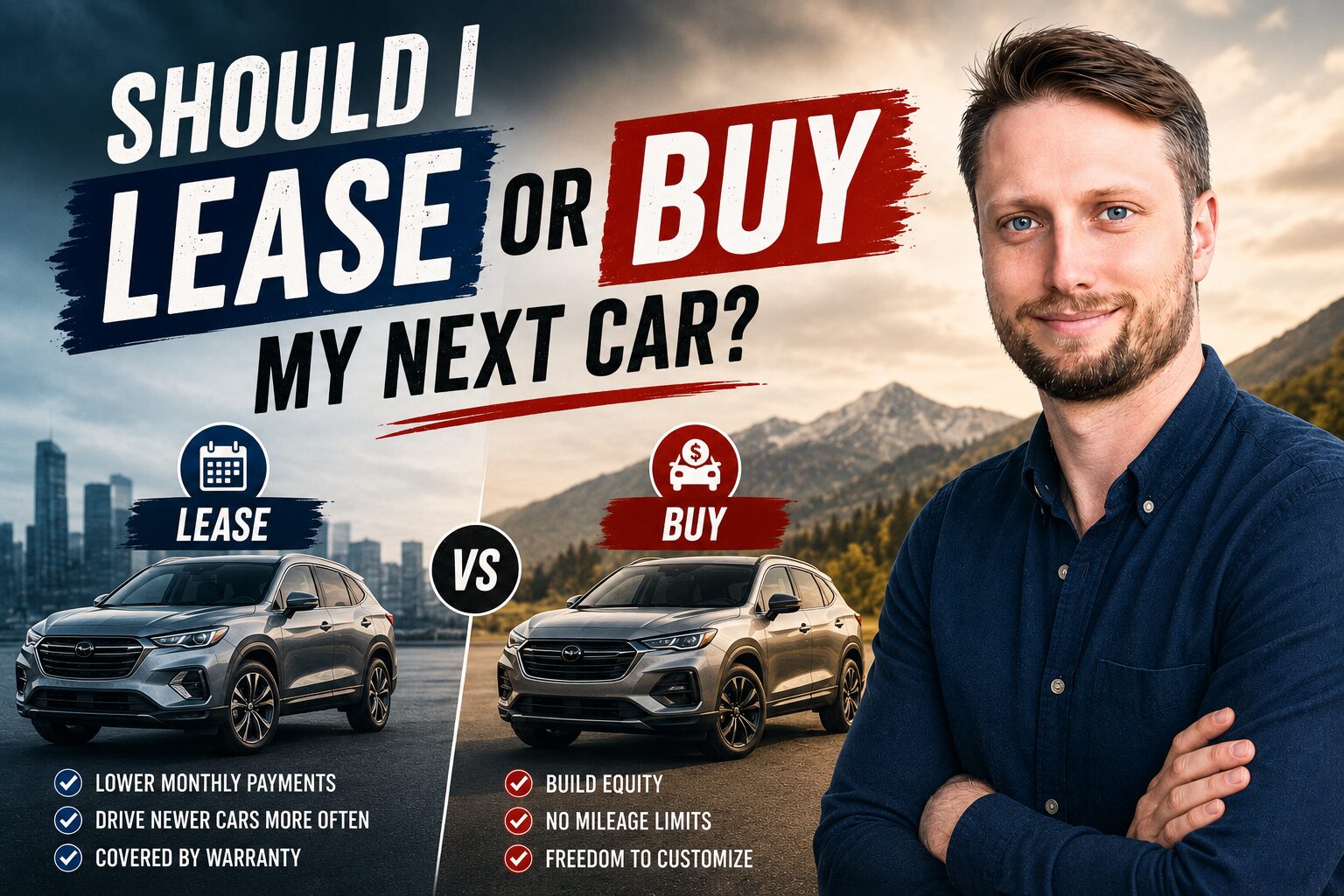
Answering: Should I Lease or Buy My Next Car?
Buying is the better financial choice for most people in 2026, saving $5,000 to $15,000 over 5 years compared to leasing, but leasing makes sense in specific situations where lower monthly payments, shorter commitment, or frequent vehicle upgrades outweigh long-term ownership costs. The average new car loan payment in 2026 is approximately $767 per month, while the average lease payment runs around $550 to $615 per month, according to Experian data. That $150 to $200 monthly gap is why leasing feels cheaper, but it comes at the cost of never building equity in the vehicle. Rolo Rides founder Andrew Eder, who spent five years inside four dealerships, explains the decision from the dealer's perspective, which is the angle most lease-vs-buy guides miss entirely.
The lease-versus-buy question is one of the most searched car buying topics on the internet, and almost every guide frames it the same way: lower monthly payments versus ownership. That framing is incomplete because it ignores how the dealership profits from each option. Understanding the dealer's incentives helps you evaluate the deal more clearly, regardless of which option you choose.
Dealers often prefer leasing because it generates predictable revenue, brings the customer back every 2 to 3 years, and creates multiple profit opportunities (the initial lease, the lease-end disposition, and the next vehicle). Buying generates a single transaction. That does not make leasing bad, but it means you should evaluate any lease offer with the same scrutiny you would bring to a purchase, including the money factor, residual value, and total cost over the lease term.
This guide compares leasing and buying on total cost, flexibility, and who benefits most from each option, with insider context on how dealers structure both.
Key Insights
- Buying saves $5,000 to $15,000 over 5 years compared to continuous leasing because you build equity and eventually eliminate the monthly payment. Leasing front-loads depreciation costs and never produces ownership.
- The money factor on a lease is the interest rate equivalent. Multiply it by 2,400 to convert to an APR. If the money factor produces an APR higher than your pre-approved loan rate, you are paying more for leasing than you would for buying at that rate.
- Leasing makes the most financial sense if you drive under 12,000 miles per year, want a new vehicle every 2 to 3 years, and value lower monthly payments over long-term cost. Buying makes sense for everyone else.
Keep reading for full details below.
Not sure which option is right for your situation?
Rolo Rides evaluates both lease and purchase scenarios on every deal, calculating the total cost of each option for your specific vehicle, credit profile, and driving habits. Andrew can tell you which option saves you more money before you commit to either one.
Table of Contents
- Key Insights
- The Real Cost Comparison: Leasing vs. Buying Over 5 Years
- When Leasing Makes Sense
- When Buying Makes Sense
- What the Dealer Does Not Explain About Leasing
- Lease vs. Buy: Side-by-Side Comparison
- Frequently Asked Questions
- Want to Learn More
- Citations
The Real Cost Comparison: Leasing vs. Buying Over 5 Years
Most lease-versus-buy comparisons focus on the monthly payment, which makes leasing look cheaper. But the monthly payment is a misleading metric because it ignores what happens after the payments stop.
Consider a $45,000 vehicle. If you buy it with a 60-month loan at 6%, your monthly payment is approximately $870 and your total cost over 5 years is roughly $52,200 (including interest). At the end of 5 years, you own a vehicle worth approximately $18,000 to $22,000 in trade-in or resale value. Your net cost of ownership: approximately $30,000 to $34,000.
If you lease the same vehicle at $580 per month for 36 months, then lease another vehicle for 24 months to cover the same 5-year period, your total lease payments are approximately $35,000 to $38,000. At the end, you own nothing. You have no vehicle, no equity, and no trade-in value. Your net cost: the full $35,000 to $38,000.
The buyer spent more per month but ended up $5,000 to $8,000 ahead because they own an asset. Over 10 years (two lease cycles versus keeping the purchased vehicle for 10 years), the gap widens to $15,000 or more because the buyer's payments stop at year 5 while the leaser's never do.
When Leasing Makes Sense
Leasing is not always the wrong choice. It makes financial sense in specific situations where the flexibility and lower monthly commitment outweigh the higher long-term cost.
You drive under 12,000 miles per year. Most leases cap mileage at 10,000 to 12,000 miles per year. If you exceed the limit, you pay $0.15 to $0.30 per mile in overage charges at lease end. If your driving fits within the cap, this is not an issue. If you regularly drive 15,000+ miles per year, leasing becomes expensive.
You want the latest safety technology. Driver-assistance features are improving rapidly. If having the newest automated braking, lane-keeping, and adaptive cruise control matters to you, leasing lets you upgrade every 2 to 3 years without selling or trading.
You are a business owner. Lease payments may be deductible as a business expense, and the tax treatment can be simpler than depreciating a purchased vehicle. Consult your CPA, but for some business owners, the tax benefit of leasing closes the cost gap with buying.
You do not want maintenance costs. Most lease terms fall within the manufacturer's bumper-to-bumper warranty, meaning major repair costs are covered. You are still responsible for tires, oil changes, and wear items, but expensive repairs are unlikely during a 3-year lease.
When Buying Makes Sense
You plan to keep the vehicle for 5 or more years. The longer you keep a purchased vehicle, the more the cost advantage grows. Once the loan is paid off, you are driving for only the cost of maintenance, insurance, and fuel. That payment-free period is where the real savings happen.
You drive more than 12,000 miles per year. High-mileage drivers face overage fees on leases that can add thousands to the cost at lease end. Buying eliminates mileage restrictions entirely.
You want to customize or modify the vehicle. Leased vehicles must be returned in near-original condition. Any modifications (wheels, tint, accessories) must be removed before return. Purchased vehicles are yours to modify as you choose.
You want to build equity. A purchased vehicle can be sold or traded at any time. That equity can serve as a down payment on your next vehicle. Leasing builds zero equity. Every payment is rent.
What the Dealer Does Not Explain About Leasing
The dealership has financial reasons to prefer leasing over selling, and understanding those reasons helps you evaluate any lease offer more critically.
The money factor is an interest rate in disguise. Lease payments are calculated using a "money factor" rather than an APR. Multiply the money factor by 2,400 to convert it to an equivalent interest rate. A money factor of .00250 equals a 6% APR. If the dealer does not volunteer the money factor, ask for it. If they cannot or will not provide it, that is a warning sign.
The residual value is set by the manufacturer, not the market. The residual value is the estimated worth of the vehicle at lease end. A higher residual produces lower payments because you are financing less depreciation. Residuals are set by the manufacturer's captive lender and cannot be negotiated. But the capitalized cost (the price of the vehicle) absolutely can be negotiated, and most buyers do not realize this. You should negotiate a lease the same way you negotiate a purchase: start with the out-the-door price, then evaluate the lease terms.
Disposition fees and wear-and-tear charges. At lease end, you may owe a disposition fee of $300 to $500 and additional charges for excess wear, tire condition, or damage beyond "normal" standards. These costs are defined in the lease contract but rarely discussed during the sales presentation.
Lease-end purchase pricing. You may have the option to buy the vehicle at lease end at the residual value. Sometimes this is a good deal (if the vehicle is worth more than the residual). Sometimes it is not. Rolo Rides evaluates lease-end scenarios to help buyers decide whether to purchase, return, or trade at the end of a lease term.
Lease vs. Buy: Side-by-Side Comparison
| Factor | Leasing | Buying |
|---|---|---|
| Monthly payment | ~$550 to $615 | ~$767 (average) |
| 5-year total cost | $35,000 to $38,000 (two leases) | $30,000 to $34,000 (net of resale) |
| Ownership at end | None (return the vehicle) | Yes (vehicle is yours) |
| Mileage limits | 10,000 to 12,000/year (overage fees) | Unlimited |
| Warranty coverage | Full manufacturer warranty during term | Warranty expires, buyer covers repairs |
| Vehicle upgrade cycle | New vehicle every 2 to 3 years | Keep as long as you want |
| Hidden costs | Disposition fee, wear charges, overage | Repairs after warranty, depreciation |
| Best for | Low mileage, short commitment, business use | Long-term ownership, high mileage, equity building |
Whether you lease or buy, the negotiation principles are the same: negotiate the vehicle price first, understand the financing terms, and review every fee before signing. Rolo Rides handles both lease and purchase negotiations, evaluating which option produces the lowest total cost for your specific situation. Andrew runs the numbers on both scenarios so you can make the decision based on data, not the dealer's preference.
Frequently Asked Questions
Q: Is leasing a car a waste of money?
A: Not necessarily, but it is more expensive in the long run. Leasing makes financial sense for low-mileage drivers who want a new vehicle every 2 to 3 years and value lower monthly payments over ownership equity. It becomes a waste of money when people lease continuously without understanding that they are paying more over time than they would by buying and keeping a vehicle for 5 to 10 years.
Q: Can I negotiate a lease the same way I negotiate a purchase?
A: Yes, and you should. The capitalized cost (the vehicle price used to calculate lease payments) is negotiable just like a purchase price. Lower the cap cost and your monthly payment drops. The money factor and residual value are set by the manufacturer's captive lender and are not negotiable, but the price of the vehicle absolutely is.
Q: What is a money factor and how do I convert it to an interest rate?
A: The money factor is the leasing equivalent of an interest rate. Multiply it by 2,400 to get the approximate APR. A money factor of .00250 equals about 6% APR. If the dealer will not tell you the money factor, that should raise concern. Rolo Rides reviews lease terms including the money factor as part of every lease evaluation.
Q: Should I buy my leased car at lease end?
A: It depends on whether the vehicle's market value is higher or lower than the residual value in your lease contract. If the vehicle is worth more than the residual, buying it and then selling or keeping it can be a good deal. If it is worth less, returning it and walking away is smarter. Andrew evaluates lease-end scenarios to help buyers make this decision based on current market data.
Want to Learn More?
This guide draws on dealership-side experience with both lease and purchase transactions across over 1,000 vehicle deals. The cost comparisons, dealer incentive explanations, and decision framework reflect how the business actually works from both sides of the desk.
Citations
- "State of the Automotive Finance Market — Q4 2025" — Experian reported an average new car loan payment of $767 per month and an average used car payment of $537 per month in Q4 2025. Average new car loan amounts reached $42,582. https://www.experian.com/automotive/auto-finance-trends
- "Buying or Leasing a Car in 2026" — Consumer Reports provides a comprehensive analysis of lease-versus-buy economics, noting that leasing costs more over time but offers lower monthly payments and warranty coverage during the lease term. https://www.consumerreports.org/cars/buying-a-car/leasing-vs-buying-a-new-car-a9135602164/
- "CFPB to Hold Auto Lenders Accountable for Illegal Discriminatory Markup" — The CFPB has flagged dealer financing practices including rate markup on both lease and purchase transactions as sources of consumer harm. https://www.consumerfinance.gov/about-us/newsroom/consumer-financial-protection-bureau-to-hold-auto-lenders-accountable-for-illegal-discriminatory-markup/
The lease-versus-buy decision is personal, but it should never be made based on the monthly payment alone. Calculate the total cost over your expected ownership period, factor in your mileage, and understand the dealer's incentives on each option. If you want someone to run both scenarios for your specific situation before you commit, a free discovery call with Rolo Rides takes 15 minutes and costs nothing.
Quality Verified
This content scored 92% in the Probably Genius Publication Readiness Assessment, meeting standards for direct answers, section depth, proof points, citation quality, and AI extractability.
This guide is one step in The Complete Car Buying Checklist, our full roadmap from research to keys in hand.
Related Reading

About the Author
Andrew Eder is the founder of Rolo Rides, a flat-fee car buying advocacy service based in Austin, Texas. Before switching sides to represent buyers, Andrew spent five years inside four dealerships, including Honda, Mazda, and Lexus, where he worked in sales and managed the finance office. That experience gave him direct insight into how vehicles are priced, how interest rates are marked up, and how the finance office generates profit most buyers never see. Andrew holds a degree in Electrical Engineering from Milwaukee School of Engineering. He has facilitated over 1,000 vehicle transactions across 9 states and built Rolo Rides on a simple principle: charge the buyer a flat fee, accept zero compensation from the dealership, and protect every part of the deal.