
How to Get the Best Trade-In Value for Your Car
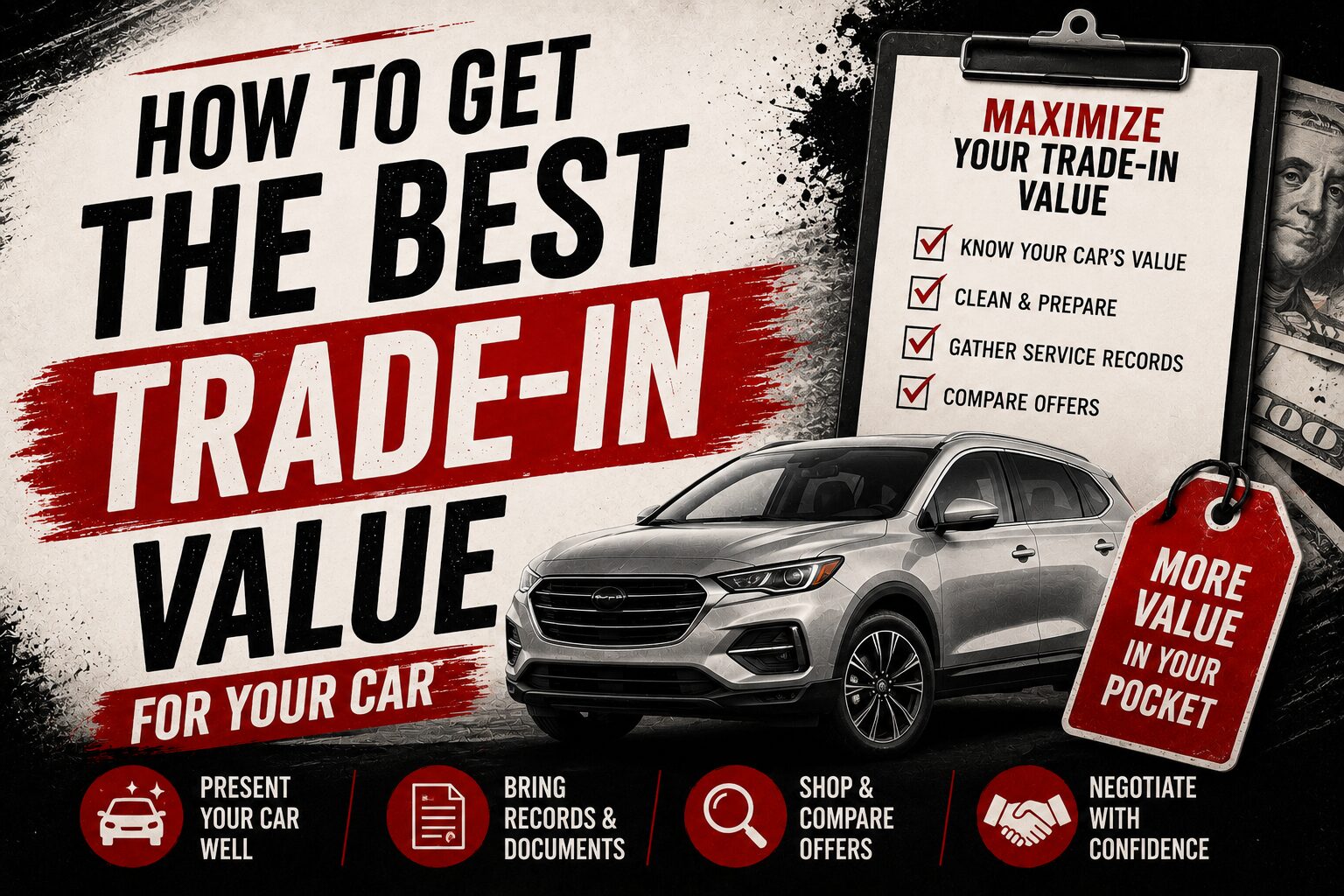
Answering: How to Get the Best Trade-In Value for Your Car
The best way to get the most for your trade-in is to treat it as its own deal: know your car's wholesale value before you walk in, gather several written offers to create competition, and never let the dealer fold the trade-in into the new-car price or the monthly payment. Do those three things and you keep hundreds to a few thousand dollars that most buyers hand back without realizing it. At Rolo Rides, founder Andrew Eder negotiates the trade-in as a separate number on every deal, drawing on years spent inside dealership sales and a dealership finance office, where he learned exactly how these numbers get built.
Here is the part that stings: most people never find out whether their trade-in offer was fair. You hear a number, it sounds close to what you expected, and you sign. The dealer counts on that. Trade-in value is the one figure in the deal you are least equipped to check, which is exactly why it is the easiest place to lose money.
The reality is that a trade-in is valued near wholesale, not retail, so it will almost always come in below what you might get selling the car yourself. That is not a scam; a dealer has to recondition, market, and resell the car. But "below retail" and "lowballed" are different things, and the space between them is where a prepared buyer wins.
This guide walks through how dealers value a trade-in, how to set your own number before you negotiate, a Texas tax rule that quietly rewards a strong trade-in, and how having an advocate on your side changes the math.
Key Insights
Negotiate your trade-in as a standalone number, never a line blended into the new-car price. Its baseline is wholesale value, so collect multiple written offers to find the top of the range. In Texas, a higher trade-in also cuts your 6.25% sales tax, because tax applies to the price minus the trade-in.
Keep reading for the complete guide.
Table of Contents
- Key Insights
- Why Dealers Want to Blur Your Trade-In Into the Deal
- Know Your Trade-In Number Before You Walk In
- The Texas Trade-In Tax Advantage Most Buyers Miss
- How an Advocate Gets You More
- Frequently Asked Questions
- Want to Learn More
- Citations
Why Dealers Want to Blur Your Trade-In Into the Deal
A car deal has four moving numbers: the price of the car you are buying, the value of your trade-in, the financing, and the monthly payment. When those numbers are discussed separately, you can win each one. When they are blended together, the dealer controls the story, and the trade-in is the easiest number to quietly shrink.
The most common move is to steer you toward a monthly payment. Once you are focused on "can I live with $610 a month," a few hundred dollars shaved off your trade-in disappears into the math, spread across 72 payments. Andrew Eder spent years inside dealership sales and finance offices, and this is the pattern he watches for first. Dealerships prefer the monthly-payment frame because it makes trade-in value, marked-up interest, and add-on fees far harder to see.
Protect yourself by keeping the numbers apart:
- Settle the price of the new car before you discuss your trade-in at all.
- Ask for the trade-in as its own written figure, not "we'll give you $3,000 off."
- Refuse to negotiate in monthly-payment terms until every number is on the table.
- Get the out-the-door total in writing, then let the monthly payment be simple math.
A trade-in folded into a discount is a trade-in you cannot check. Pulled out into its own number, it becomes something you can shop, compare, and push higher.
Know Your Trade-In Number Before You Walk In
You cannot tell whether an offer is fair if you do not know what your car is actually worth, so set your own number first. According to Consumer Reports, trade-in value tracks closely to a car's wholesale or auction value, while private-party value sits between wholesale and full retail. In plain terms, the dealer's opening offer starts near the bottom of that range, and your job is to pull it toward the top.
Give yourself real negotiating room by collecting several offers before you commit:
| Option | What it pays | Best for |
|---|---|---|
| Dealer trade-in | Near wholesale; convenient, one transaction | Buyers who want speed and the tax benefit (below) |
| Instant cash offer (online buyers) | Near wholesale, sometimes a touch higher; quick | A written benchmark that makes the dealer compete |
| Private-party sale | Highest, but slower and more work | Buyers with time who are comfortable selling themselves |
Two or three written offers turn "trust me, that's a good number" into a real market. Bring a printed instant cash offer to the dealership and the appraiser has to beat it, not just name a figure. Before any appraisal, clean the car inside and out, fix small broken items, and gather service records; Consumer Reports notes these steps directly influence what a dealer will pay. Rolo Rides sources competing offers on a client's behalf, so the trade-in is negotiated against real numbers, not a single take-it-or-leave-it appraisal.
The Texas Trade-In Tax Advantage Most Buyers Miss
In Texas, a strong trade-in does more than raise your credit; it lowers your tax bill. The Texas Comptroller charges motor vehicle sales tax at 6.25 percent, and that tax is calculated on the sales price minus your trade-in allowance, not the full price of the car. Trade in a vehicle and you are taxed only on the difference.
The math adds up fast. On a $40,000 vehicle with a $15,000 trade-in, you are taxed on $25,000, which at 6.25 percent saves about $937.50 versus paying tax on the full price. That saving is real only when the trade-in is part of the same purchase and the car is transferred to the dealer; the Comptroller is explicit that proceeds from a separate private-party sale cannot reduce your tax.
One trap to know: the deduction is based on the value of the car you trade, not your equity in it. If you owe more than the car is worth, that negative equity does not lower your taxable amount, and rolling it into a new loan is one of the fastest ways to end up underwater again. Andrew Eder ran a dealership finance office, so he flags negative equity before it gets buried in a payment. For buyers weighing the convenience and tax benefit of a trade-in against a private sale, this rule often tips the decision.
How an Advocate Gets You More
This is where a car-buying advocate earns the fee. Rolo Rides charges a flat $999, takes zero compensation from the dealer, and represents only you, so there is no incentive to soften your trade-in to sweeten the dealership's side. Andrew negotiates the sale price, the trade-in value, the financing, and any add-ons as four separate numbers, the same way he learned to structure deals from inside the business.
In practice that means knowing your car's wholesale range, bringing competing written offers to the table, keeping the conversation on the out-the-door total instead of the monthly payment, and catching negative equity or a marked-up interest rate before you sign. Clients consistently describe the same relief, reflected in Rolo Rides' 4.6-star rating across 18 verified Google reviews: for the first time, they know they got a fair number instead of hoping they did. A trade-in negotiated at its real value, rather than the dealer's opening bid, is money kept, and it stacks with every other figure a separated deal protects.
You can absolutely do this yourself with preparation and patience. But if the showroom fight is not how you want to spend a weekend, having someone who has sat on the other side of the desk handle it can be the difference between a fair deal and a great one.
A trade-in is not a favor the dealer does you; it is a number you can shop, and in Texas it also trims the 6.25 percent sales tax you owe. Know your car's wholesale value, gather competing offers, and keep every figure separate, and you turn the one part of the deal buyers usually lose into one you win.
Frequently Asked Questions
How do I get the best trade-in value for my car?
Treat it as a separate negotiation from the car you are buying. Know your vehicle's wholesale value before you arrive, collect two or three written offers (from dealers and online instant-cash buyers) to create competition, and refuse to discuss the trade-in as a discount or a monthly payment. A trade-in negotiated as its own number, backed by competing offers, almost always beats a dealer's first appraisal.
Is it better to trade in my car or sell it privately?
A private sale usually brings the most money, because trade-in value tracks a car's wholesale price while private-party value sits closer to retail, according to Consumer Reports. But a private sale takes time, effort, and some risk. A trade-in is faster, and in Texas it also lowers your sales tax, since you are taxed only on the new car's price minus the trade-in. For many buyers, that convenience and tax saving narrow the gap enough to make trading in the better overall deal.
Does trading in a car lower my sales tax in Texas?
Yes. The Texas Comptroller applies the 6.25 percent motor vehicle sales tax to the purchase price minus your trade-in allowance, not the full price. Trade in a $15,000 vehicle on a $40,000 purchase and you are taxed on $25,000, saving roughly $937.50. The trade-in must be part of the same transaction; proceeds from a separate private sale do not qualify.
Should I have someone handle my trade-in and car purchase for me?
If you are short on time or tired of second-guessing whether you got a fair number, an advocate can handle the whole process. Rolo Rides negotiates the trade-in, price, and financing as separate numbers for a flat $999, with zero compensation from the dealer, so the only side represented is yours. The simplest first step is a short consultation to see how much a professionally negotiated trade-in could add to your deal.
Want to Learn More?
Andrew Eder built Rolo Rides after years inside dealership sales and finance offices, and now uses that experience to represent buyers instead of dealers. With a 4.6-star rating across 18 verified Google reviews, he brings the insider knowledge most buyers never get access to.
Citations
- Trade-Ins, Texas Motor Vehicle Tax Guide (96-254), Texas Comptroller. Confirms Texas taxes the purchase price minus the trade-in value (not equity), and that private-party sale proceeds cannot reduce the tax. https://comptroller.texas.gov/taxes/publications/96-254/trade-ins.php
- Motor Vehicle Sales and Use Tax, Texas Comptroller. The 6.25 percent motor vehicle sales tax applied to sales price less any trade-in allowance. https://comptroller.texas.gov/taxes/motor-vehicle/sales-use.php
- Car Value Estimator, Consumer Reports. Trade-in value aligns with wholesale/auction value; private-party value sits between wholesale and retail; reconditioning affects the offer. https://www.consumerreports.org/cars/car-value-estimator/
For a deeper look at how we treat the trade-in as its own negotiation, book a short, no-pressure call. Andrew will look at your specific car and deal, tell you what your trade-in should realistically bring, and show you where the extra money usually hides.
It is a flat $999 to have a former dealership insider negotiate the whole purchase on your side, and most clients say the certainty alone is worth it.
Buying from outside Central Texas? Andrew works with buyers across the country through our nationwide car buying service.
Related Reading
- What Actually Happens in the Dealership Finance Office?
- How to Negotiate a Car Price Without Going to the Dealership
- Is Hiring a Car Buying Service Worth the Money?
This guide is one step in The Complete Car Buying Checklist, our full roadmap from research to keys in hand.

About the Author
Andrew Eder is the founder of Rolo Rides, a flat-fee car buying advocacy service based in Austin, Texas. Before switching sides to represent buyers, Andrew spent five years inside four dealerships, including Honda, Mazda, and Lexus, where he worked in sales and managed the finance office. That experience gave him direct insight into how vehicles are priced, how interest rates are marked up, and how the finance office generates profit most buyers never see. Andrew holds a degree in Electrical Engineering from Milwaukee School of Engineering. He has facilitated over 1,000 vehicle transactions across 9 states and built Rolo Rides on a simple principle: charge the buyer a flat fee, accept zero compensation from the dealership, and protect every part of the deal.