
How Much Should I Put Down on a Car?
Answering: How Much Should I Put Down on a Car?
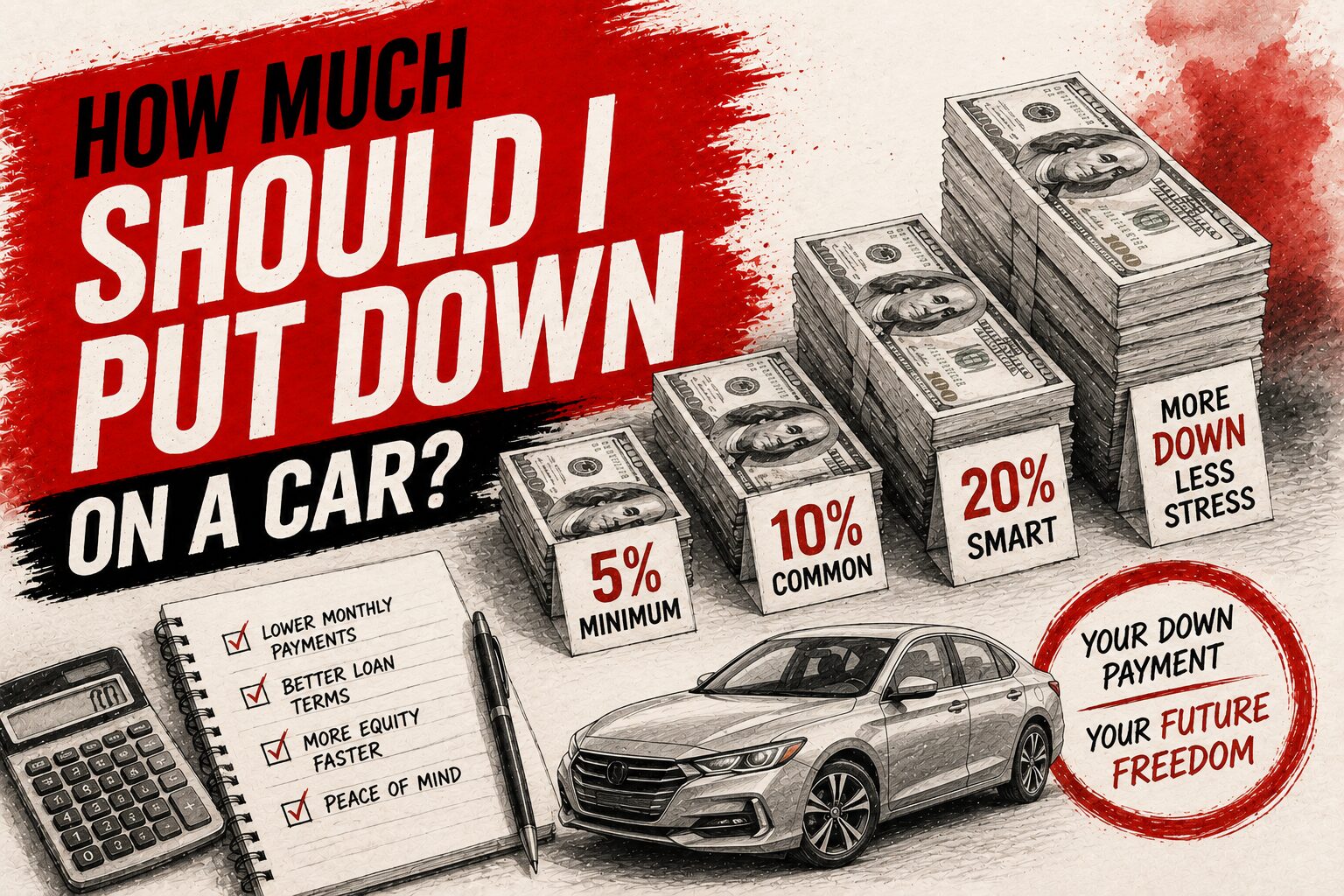
A widely used guideline is to put down at least 20 percent on a new car and 10 percent on a used car, but the right amount is enough to avoid owing more than the car is worth while keeping a healthy emergency cushion. A larger down payment lowers your monthly payment, reduces the interest you pay, and builds equity faster. Rolo Rides founder Andrew Eder, a former dealership sales and finance professional, helps buyers size a down payment that protects them rather than the dealer.
The down payment is one of the few parts of a car deal you fully control, and it quietly shapes everything that follows: your payment, your total interest, and how quickly you actually own the car. Getting it right is one of the highest-leverage decisions you make.
The reality is that there is no single perfect number. The best down payment depends on your loan rate, your budget, and how long you plan to keep the car. The goal is to avoid being underwater without draining the savings you need for emergencies.
This guide covers why the down payment matters more than most buyers think, how much to put down, and the situations where putting down less or more is the smarter move.
Key Insights
A common target is 20 percent down on a new car and 10 percent on a used one, largely to avoid negative equity, since new cars depreciate fastest early on. A bigger down payment lowers your payment and total interest. But never drain your emergency fund; being cash-poor to avoid a slightly higher payment is its own risk.
Keep reading for the complete guide.
Table of Contents
- Key Insights
- Why Your Down Payment Matters More Than You Think
- How Much to Put Down: The Guideline and the Reality
- When to Put Down Less, or More
- Frequently Asked Questions
- Want to Learn More
- Citations
Why Your Down Payment Matters More Than You Think
Your down payment does more than lower the sticker you finance; it changes the entire shape of the loan. Every dollar down is a dollar you do not borrow and do not pay interest on, so a larger down payment reduces both your monthly payment and the total cost of the car over the life of the loan.
It also protects you from one of the most common financial traps in car buying:
- Lower monthly payment, because you are financing a smaller amount.
- Less total interest paid over the life of the loan.
- Faster equity, so you owe less than the car is worth sooner.
- Protection from negative equity, the situation where you owe more than the car is worth.
Negative equity matters because new cars depreciate quickly in the first years, so a small down payment can leave you underwater almost immediately. Andrew Eder ran a dealership finance office and has seen how negative equity from a too-small down payment gets rolled into the next loan, compounding the problem.
How Much to Put Down: The Guideline and the Reality
The classic guidance is 20 percent down on a new car and 10 percent on a used car, and the logic holds up well. Because new vehicles lose value fastest early on, roughly 20 percent down keeps most buyers from owing more than the car is worth in those first depreciating years. Used cars depreciate more slowly, so a smaller cushion goes further.
| Down payment | Effect |
|---|---|
| Less than 10% | Higher payment and real risk of negative equity, especially on a new car |
| 10% (used) / 20% (new) | Common guideline; helps avoid being underwater and lowers interest |
| More than 20% | Lower payment and less interest, as long as you keep an emergency fund |
The reality check is your savings. It rarely makes sense to empty your emergency fund to hit a target down payment, because being cash-poor is its own risk. A slightly higher payment you can absorb is usually safer than no financial cushion. Aim for the guideline, but never at the expense of the savings you would need if life happens.
When to Put Down Less, or More
The right amount flexes with your rate and plans, so treat the guideline as a starting point. If you qualify for a very low promotional interest rate, keeping more cash and putting down less can make sense, since the borrowed money is cheap and your savings may be better kept liquid. The math changes when money is nearly free to borrow.
On the other hand, if your rate is high, putting down more reduces the balance that expensive interest is charged on, saving you real money. Buyers who plan to keep a car for many years also benefit from more down, because they build equity and reach loan payoff sooner. Rolo Rides charges a flat $999, takes zero dealer compensation, and helps buyers weigh the down payment against the rate and budget as part of the whole deal, which is part of why clients report a 4.6-star rating across 18 verified Google reviews.
You can absolutely run this math yourself. But if you would rather have someone who has structured thousands of deals help you balance the down payment, rate, and budget, that guidance is exactly what an advocate provides.
The right down payment is the one that keeps you from owing more than the car is worth while preserving your emergency savings. Aim for roughly 20 percent on a new car or 10 percent on a used one, then adjust for your rate and how long you plan to keep it.
Frequently Asked Questions
How much should I put down on a car?
A common guideline is at least 20 percent down on a new car and 10 percent on a used car. The main reason is to avoid negative equity, since new cars depreciate fastest in the early years. A larger down payment lowers your monthly payment and reduces total interest. The right number for you also depends on your interest rate, your budget, and keeping enough savings for emergencies, so treat the guideline as a starting point.
Is it better to put more money down on a car?
Usually, yes, as long as you keep an emergency fund. A larger down payment means you borrow less, so you pay a lower monthly payment and less total interest, and you build equity faster. This is especially valuable when your interest rate is high or you plan to keep the car for many years. The exception is a very low promotional rate, where keeping more cash liquid and financing more can make sense.
What happens if I put too little down on a car?
Putting too little down, especially on a new car, can leave you with negative equity, meaning you owe more than the car is worth. That is risky if you need to sell or if the car is totaled early, and the shortfall often gets rolled into the next loan, compounding the problem. A larger down payment, near the 20 percent guideline for new cars, helps you avoid being underwater.
Should I drain my savings for a bigger car down payment?
No. It rarely makes sense to empty your emergency fund to hit a down payment target, because being cash-poor is its own financial risk. A slightly higher monthly payment you can comfortably absorb is usually safer than having no cushion for unexpected expenses. Aim for the down-payment guideline, but keep enough savings to handle life's surprises.
Want to Learn More?
Andrew Eder built Rolo Rides after years inside dealership sales and finance offices. He helps buyers size the down payment to protect themselves, not the dealer, backed by a 4.6-star rating across 18 verified Google reviews.
Citations
- Auto Loans, Consumer Financial Protection Bureau. Federal guidance on down payments, loan terms, and how the amount financed affects total cost. https://www.consumerfinance.gov/consumer-tools/auto-loans/
- Negative Equity and Car Loans, Experian. Explains how small down payments and fast depreciation can leave buyers owing more than the car is worth. https://www.experian.com/blogs/ask-experian/what-is-negative-equity-on-a-car/
- How Much to Spend on a Car, Consumer Reports. Guidance on down payments, loan length, and keeping total vehicle costs affordable. https://www.consumerreports.org/cars/buying-a-car/how-much-car-can-you-afford-a2543652803/
Book a short, no-pressure call and Andrew will help you weigh the right down payment against your rate and budget, as part of a deal negotiated entirely on your side.
It is a flat $999 to have a former dealership insider structure the whole purchase so your down payment works for you, not the finance office.
Buying from outside Central Texas? Andrew works with buyers across the country through our nationwide car buying service.
This guide is one step in The Complete Car Buying Checklist, our full roadmap from research to keys in hand.
Related Reading

About the Author
Andrew Eder is the founder of Rolo Rides, a flat-fee car buying advocacy service based in Austin, Texas. Before switching sides to represent buyers, Andrew spent five years inside four dealerships, including Honda, Mazda, and Lexus, where he worked in sales and managed the finance office. That experience gave him direct insight into how vehicles are priced, how interest rates are marked up, and how the finance office generates profit most buyers never see. Andrew holds a degree in Electrical Engineering from Milwaukee School of Engineering. He has facilitated over 1,000 vehicle transactions across 9 states and built Rolo Rides on a simple principle: charge the buyer a flat fee, accept zero compensation from the dealership, and protect every part of the deal.