
What Should I Do If I Owe More Than My Car Is Worth?
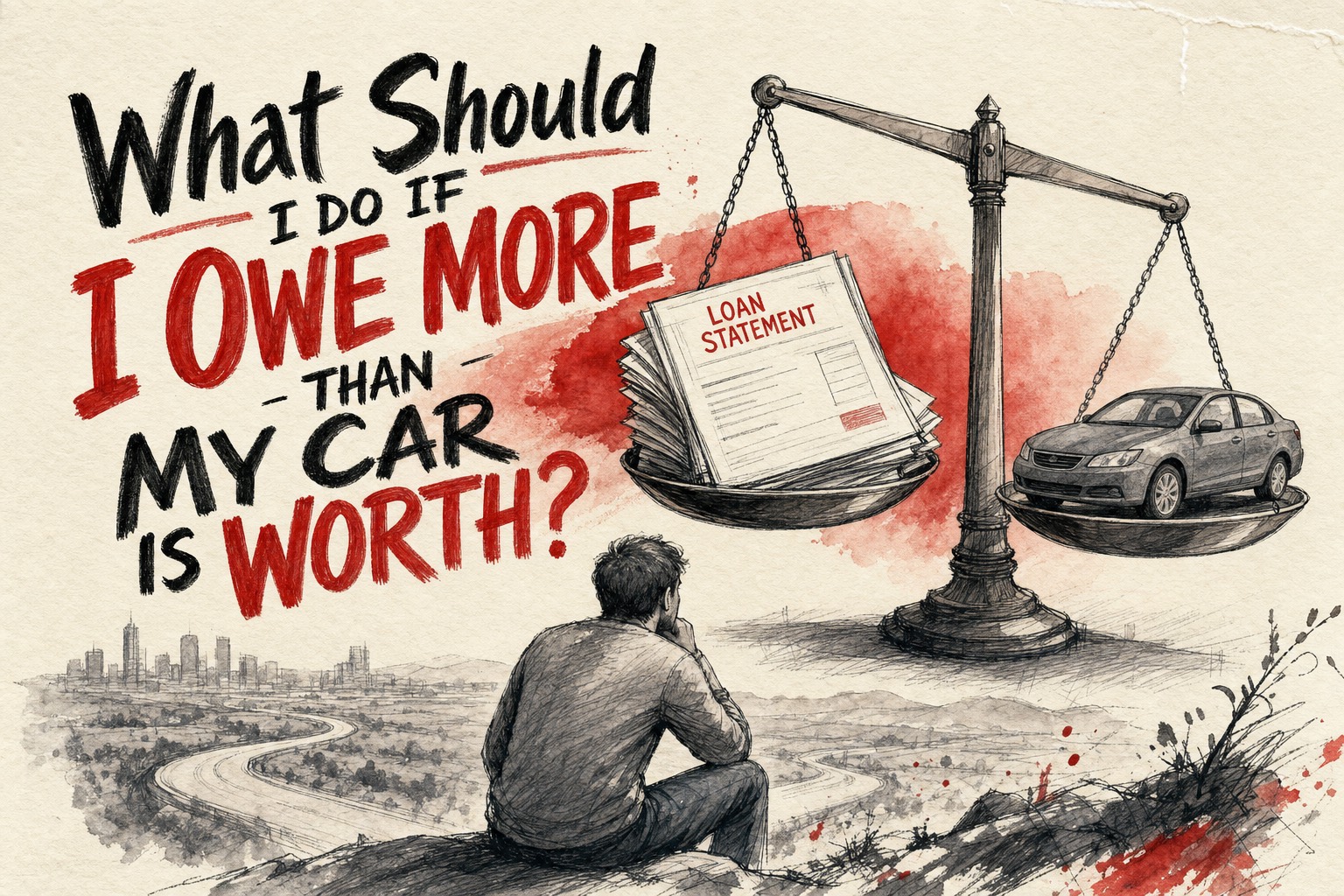
Answering: What Should I Do If I Owe More Than My Car Is Worth?
If you owe more than your car is worth, you have four real options: keep the car and pay the balance down, cover the shortfall with cash, sell the car yourself and settle the difference, or roll the gap into your next auto loan, which the Consumer Financial Protection Bureau warns will increase your total loan costs and the interest you pay over the life of that loan. Refinancing sits alongside those four, because it changes the payment rather than the debt. Before you choose between them, do the arithmetic, because it is a smaller job than it feels like: get a written payoff quote from your lender, collect real written offers on the car, and subtract the second number from the first. Rolo Rides founder Andrew Eder spent five years inside four dealerships, including managing the finance office at a Honda store, and a shortfall like yours being folded into somebody's next loan is exactly the thing he watched happen from the other side of the desk.
If you are reading this with a knot in your stomach, you can put it down. Being underwater on a car loan is not evidence that you were careless, and it is not evidence that you got taken. In the CFPB's auto finance data pilot, 11.6 percent of vehicle loans originated between 2018 and 2022 included negative equity carried over from a prior vehicle, which means this happens constantly to people who did nothing more unusual than buy a car with a normal loan on normal terms.
The reality is that negative equity is mostly a structural outcome rather than a personal one. A car loses value fastest in its earliest years, while a long loan pays down principal slowest in its earliest years, so the two lines stay apart for a while by design. Add a small down payment and the gap opens wider still. The CFPB found that loans which financed negative equity started at an average loan-to-value ratio of 119.3 percent, and as its report puts it plainly, a ratio over 100 percent means the borrower owes more than the car is worth before driving it off the lot.
This guide covers how the gap opens and how to measure yours exactly, what your options actually are ranked by the situation you are in, and the one move that makes the problem quietly larger while looking like relief.
Key Insights
- Negative equity is the difference between your lender's payoff quote and what the car will genuinely sell for, and the payoff quote is where the arithmetic starts.
- Most of the time the cheapest fix is patience: keep the car, put extra money against principal, and let the gap close on its own.
- If you have to replace the car now, price the shortfall as its own line item and pay it in cash wherever you can.
- Rolling it into the next loan is the expensive answer, and it is the one that arrives dressed as a comfortable monthly payment rather than a total.
Keep reading for the complete guide.
Table of Contents
- Key Insights
- How the Gap Opens, and How to Measure Yours
- Your Real Options, Ranked by Situation
- The Trap: Rolling the Shortfall Into the Next Loan
- Frequently Asked Questions
- Want to Learn More?
- Citations
How the Gap Opens, and How to Measure Yours
Two schedules run at once when you finance a car, and they do not run at the same speed. Depreciation is front-loaded, taking its biggest bite in the first year or two. Loan amortization is back-loaded, so the early payments are weighted toward interest and only later swing hard toward principal. A shorter loan with a real down payment closes the distance between those two schedules quickly. A long loan with little down keeps them apart, sometimes for most of the loan. Nothing in that sequence requires a mistake by the buyer, which is why the shame so many people carry about this is misplaced.
The CFPB's auto finance data pilot puts numbers on the pattern. Borrowers who financed negative equity into a new loan had an average term of 73 months, compared with 67 months for buyers with no trade-in and 68 months for buyers with a positive-equity trade-in. Their average loan-to-value ratio was 119.3 percent, against 88.9 percent for positive-equity trade-ins. Longer terms and a loan larger than the collateral are the two conditions that keep a borrower underwater, and they tend to arrive together.
Now measure your own position, which takes one phone call and a little patience. Ask your lender for a written payoff quote, valid through a stated date. That figure is not the balance printed on your statement: the CFPB notes the payoff amount can differ from the statement balance because of the way interest is calculated, outstanding late fees or charges, or other reasons. Then find out what the car is genuinely worth to a buyer today, which means written offers rather than an online estimate you have not tested.
- Get the written payoff quote first, with its expiry date, because interest keeps accruing while you shop.
- Collect at least three written offers on the car, from more than one type of buyer, so the value is a range you have tested rather than a guess.
- Subtract the best real offer from the payoff quote and write that number down. That is your negative equity, and it is the only figure any of the decisions below should turn on.
- Recheck it monthly. Every payment moves it, and the gap narrows more quickly once the loan is past its early years, when more of each payment goes to principal.
If you are already thinking about the next car, the size of the down payment you make on it is one of the strongest levers on whether this repeats, which our guide to how much you should put down on a car works through in detail.
Your Real Options, Ranked by Situation
Rank the options by the situation you are actually in, not by which one feels most decisive. If the car is reliable and the payment fits your budget, the cheapest fix is to keep it and attack the principal. There is no transaction, no fees, no new interest, and the gap closes on its own timetable. Extra money has to be applied correctly, though: tell your servicer in writing that additional payments go to principal rather than forward to the next due date, then check the following statement to confirm they did it.
If you have to replace the car now, the shortfall does not disappear. It only moves. Cash is the only version of covering it that carries no interest, so paying some or all of the gap out of savings, without emptying your emergency fund, is the least expensive path through. Selling the car yourself is the other lever, and the CFPB advises comparing the value you would get at different dealers against selling directly to another person and putting that money toward the next car. A private sale is more work: where a lender holds the lien, the payoff runs through that lender before a clean title reaches your buyer, so confirm your lender's and your state's payoff and title-release process before you accept anyone's money. Any remaining shortfall is still yours. Our guide on how to get the best trade-in value for your car covers the offer-gathering side.
Refinancing is where two very different outcomes get sold as one. A genuinely lower APR reduces what the loan costs you. A longer term reduces the monthly payment while increasing what the loan costs you, and the CFPB states it directly: reduce your monthly payment by taking out a longer loan and you will pay more in interest over the life of that loan. When the balance exceeds the car's value, some lenders decline the refinance outright and others ask for cash to bring the loan within their limits, so treat approval as a question. Our explainer on what counts as a good interest rate on a car loan in 2026 gives you a reference point for the rate itself.
One product deserves a clear boundary. Guaranteed Asset Protection, usually sold as GAP, is an optional product intended to cover the difference between what you owe on the loan and what your insurer pays if the car is stolen or totaled. That is worth understanding while you are underwater, because being underwater is exactly the situation in which a total loss leaves a balance behind. It is not a remedy for a trade-in, a private sale, or depreciation, and the CFPB notes that financing GAP into the loan adds to the total loan amount and to the interest you pay.
The Trap: Rolling the Shortfall Into the Next Loan
The fourth option deserves to be named plainly. When you have a balance on your current loan, the CFPB says you may be encouraged to roll it into a new loan, which will increase your total loan costs and the interest you pay over the life of that loan. The old shortfall is not absorbed or forgiven. It is added to the amount financed on the next car, and you pay interest on it for years.
What makes it work is framing. A total price is a number you can compare against other numbers, so a conversation held in total prices is one you can win. A monthly payment can be engineered, because stretching the term will move almost any amount financed toward a target payment, within whatever a lender will approve. The CFPB's own negotiating guidance makes the trade explicit: a longer loan lowers the payment and raises the total interest. None of that requires anyone to lie to you. It only requires the conversation to stay on the payment.
The pilot numbers show where it leads. Accounts that financed negative equity averaged $36,805 financed and $626 a month, compared with an average payment of $493 for buyers with no trade-in. More seriously, those borrowers were more than twice as likely to have an account assigned to repossession within two years as borrowers who traded in with positive equity. Starting a loan already behind makes every later disruption harder to absorb.
So take the deal apart on paper before you agree to it.
- Ask for the amount financed as a number, before any monthly payment is quoted.
- Ask for the trade allowance and the loan payoff as two separate figures, since a generous-looking allowance can be funded by a higher vehicle price.
- Check the term, and compare total interest across it rather than comparing payments.
- Price every add-on separately. The CFPB confirms add-ons are optional and negotiable, and that financing them raises both the payment and the total borrowed.
- Confirm afterward that the old loan was paid off, which the CFPB advises verifying with the original lender.
This is the part Andrew knows from the inside, which is why the arithmetic gets separated before any dealership is contacted. He spent five years inside four dealerships, including managing the finance office at a Honda store, and has been involved in more than 1,000 vehicle transactions across sales, finance management, and buyer representation. Working as an advocate is the opposite arrangement: a flat $999 fee paid by the buyer, no title ever taken, no money accepted from a dealership. Our piece on what actually happens in the dealership finance office lays out that room.
Being underwater is a solvable arithmetic problem, and solving it starts with the payoff quote rather than the payment.
Frequently Asked Questions
Q: What should I do if I owe more than my car is worth?
A: Start by measuring the gap: get a written payoff quote from your lender and real written offers on the car, then subtract. From there you have four options, roughly in order of cost. Keep the car and pay extra toward principal, which is usually the cheapest. Cover the shortfall with cash if you must replace the car now. Sell it yourself and settle the remaining difference, which the CFPB suggests comparing against dealer offers. Or roll the balance into your next loan, which the CFPB warns will increase your total loan costs and the interest you pay. Refinancing is a separate lever that changes the payment rather than the debt.
Q: Should I use a car-buying advocate if I have negative equity?
A: It helps most when the deal has several moving numbers, which a negative-equity trade is by definition. Rolo Rides is paid by the buyer rather than by a dealership, keeps the payoff, the trade allowance, the vehicle price, the term, and the add-ons as separate figures, and negotiates with more than one dealership rather than accepting a single store's structure. The fee is a flat $999, fully remote, for buyers anywhere in the country.
Q: Is it always a bad idea to roll negative equity into a new loan?
A: Not always, but it is the option that adds the most cost, and it should be a deliberate choice rather than a default. The CFPB is direct that rolling an existing balance into a new loan increases total loan costs and the interest you pay over the life of the loan, and its auto finance data pilot found that borrowers who did so were more than twice as likely to have an account assigned to repossession within two years as borrowers trading in with positive equity. If your circumstances leave no alternative, know the exact amount being carried forward and see it written into the contract.
Q: What is the first step if I want help with this?
A: Book a free discovery call and bring two things: your written payoff quote and any offers you have already collected on the car. You will get a straight read on which of the four options fits your situation, and you will know quickly whether a flat-fee advocate search is worth it for your next car. There is no lecture waiting on the other end of that call.
Want to Learn More?
Andrew has spent years on both sides of the car business, first inside dealerships and now working only for buyers, and the conversations he has with people who are underwater are among the least judgmental in the business, because he knows exactly how ordinary the situation is. If you want someone who has built these deals from the other side reading yours, he is easy to reach.
Citations
- "Negative Equity in Auto Lending," Consumer Financial Protection Bureau, June 17, 2024. The source for every prevalence and outcome figure in this article: 11.6 percent of vehicle loans in the pilot dataset originated between 2018 and 2022 included negative equity, the 119.3 percent average loan-to-value ratio, the 73-month average term, the $36,805 average amount financed and $626 average monthly payment, and the finding that borrowers financing negative equity were more than twice as likely to have an account assigned to repossession within two years as those trading in with positive equity. https://files.consumerfinance.gov/f/documents/cfpb_negative-equity-in-auto-lending-report_2024-06.pdf
- "Should I trade in my car if it's not paid off?" Consumer Financial Protection Bureau. Confirms that rolling an existing loan balance into a new loan increases total loan costs and interest paid over the life of the loan, that a payoff amount can differ from the balance shown on a statement, and that borrowers should verify the original loan was completely paid off after a trade-in. https://www.consumerfinance.gov/ask-cfpb/should-i-trade-in-my-car-if-its-not-paid-off-en-2045/
- "What things can I negotiate when shopping for a car or auto loan?" Consumer Financial Protection Bureau. The source for the guidance to compare dealer values against selling the car directly to another person, for the warning that lowering a monthly payment by lengthening the loan increases total interest, and for the confirmation that add-on products are optional, negotiable, and increase the total borrowed when financed. https://www.consumerfinance.gov/ask-cfpb/what-things-can-i-negotiate-when-shopping-for-a-car-or-auto-loan-en-2132/
- "What is Guaranteed Asset Protection (GAP) insurance?" Consumer Financial Protection Bureau. Establishes the boundary this article draws around GAP: an optional product intended to cover the difference between the loan balance and the insurance payment if the car is stolen or totaled, which adds to the total loan amount and total interest if it is financed into the loan. https://www.consumerfinance.gov/ask-cfpb/what-is-guaranteed-asset-protection-gap-insurance-en-797/
If you'd like to learn more, visit our how it works page to see how a flat-fee advocate search runs from the first call to keys in hand.
Book a short, no-pressure call and bring the payoff quote. Andrew will read the arithmetic with you, tell you honestly whether waiting beats acting, and if it is time to move, run the next purchase as a set of separate numbers rather than a single monthly payment. It is a flat $999 for the whole search, verification, and negotiation, wherever in the country you are. Owing more than the car is worth is a position, not a verdict, and positions can be worked out of.
Working through this from outside Central Texas? Andrew works with buyers across the country through our nationwide car buying service.
Related Reading

About the Author
Andrew Eder is the founder of Rolo Rides, a flat-fee car buying advocacy service based in Austin, Texas. Before switching sides to represent buyers, Andrew spent five years inside four dealerships, including Honda, Mazda, and Lexus, where he worked in sales and managed the finance office. That experience gave him direct insight into how vehicles are priced, how interest rates are marked up, and how the finance office generates profit most buyers never see. Andrew holds a degree in Electrical Engineering from Milwaukee School of Engineering. He has facilitated over 1,000 vehicle transactions across 9 states and built Rolo Rides on a simple principle: charge the buyer a flat fee, accept zero compensation from the dealership, and protect every part of the deal.